
Local Indigenous Communities
A look at the local Indigenous communities in and around the London area
The London area is on the traditional lands of the Anishinaabek, Haudenosaunee, Lūnaapéewak, and Attawandaron.
The map below depicts London and the surrounding areas. The red dots are the locations of Indigenous reserves in the area. It must also be noted that urban London is also home to a rich and diverse population of Indigenous folks in urban London, who belong to many nations.
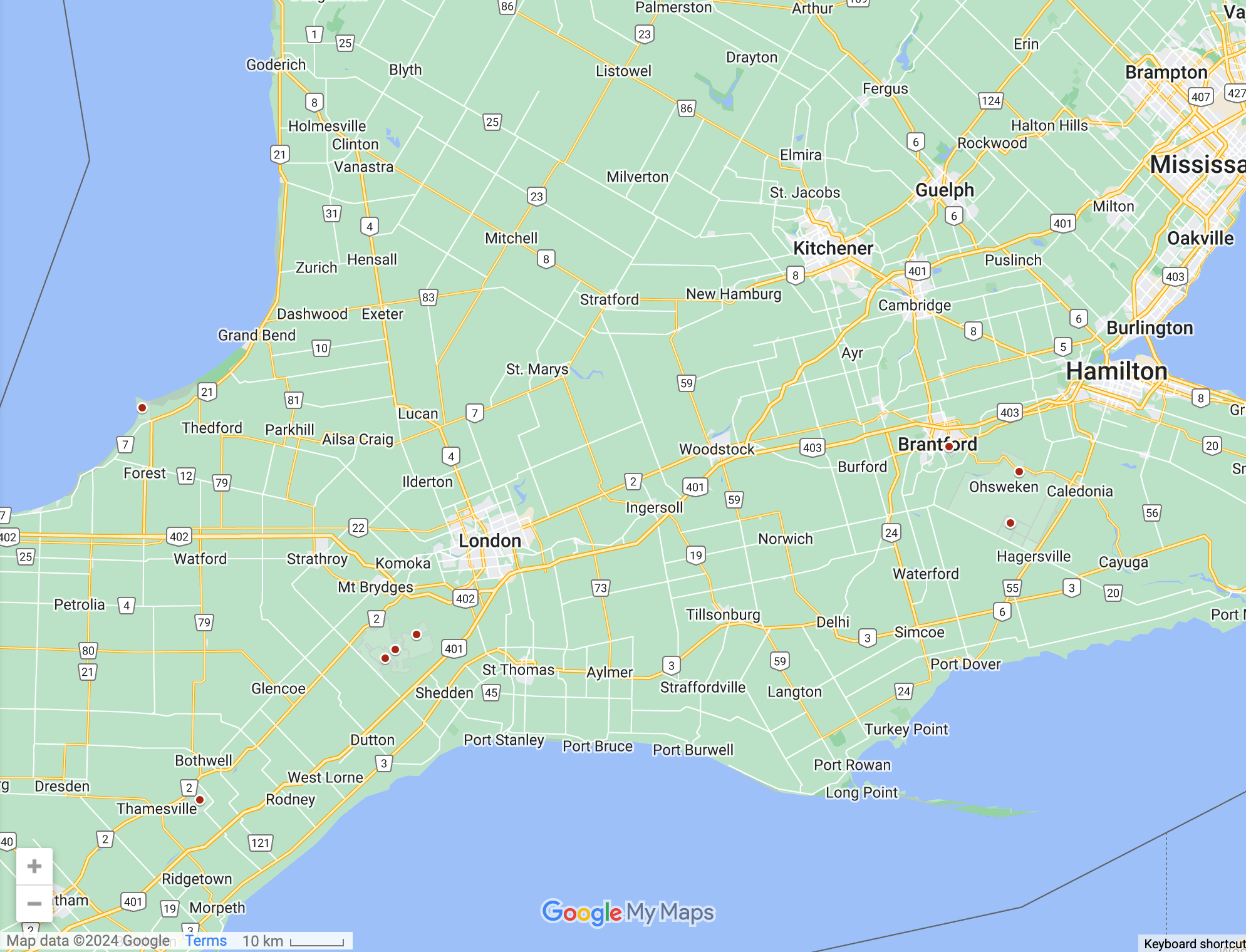
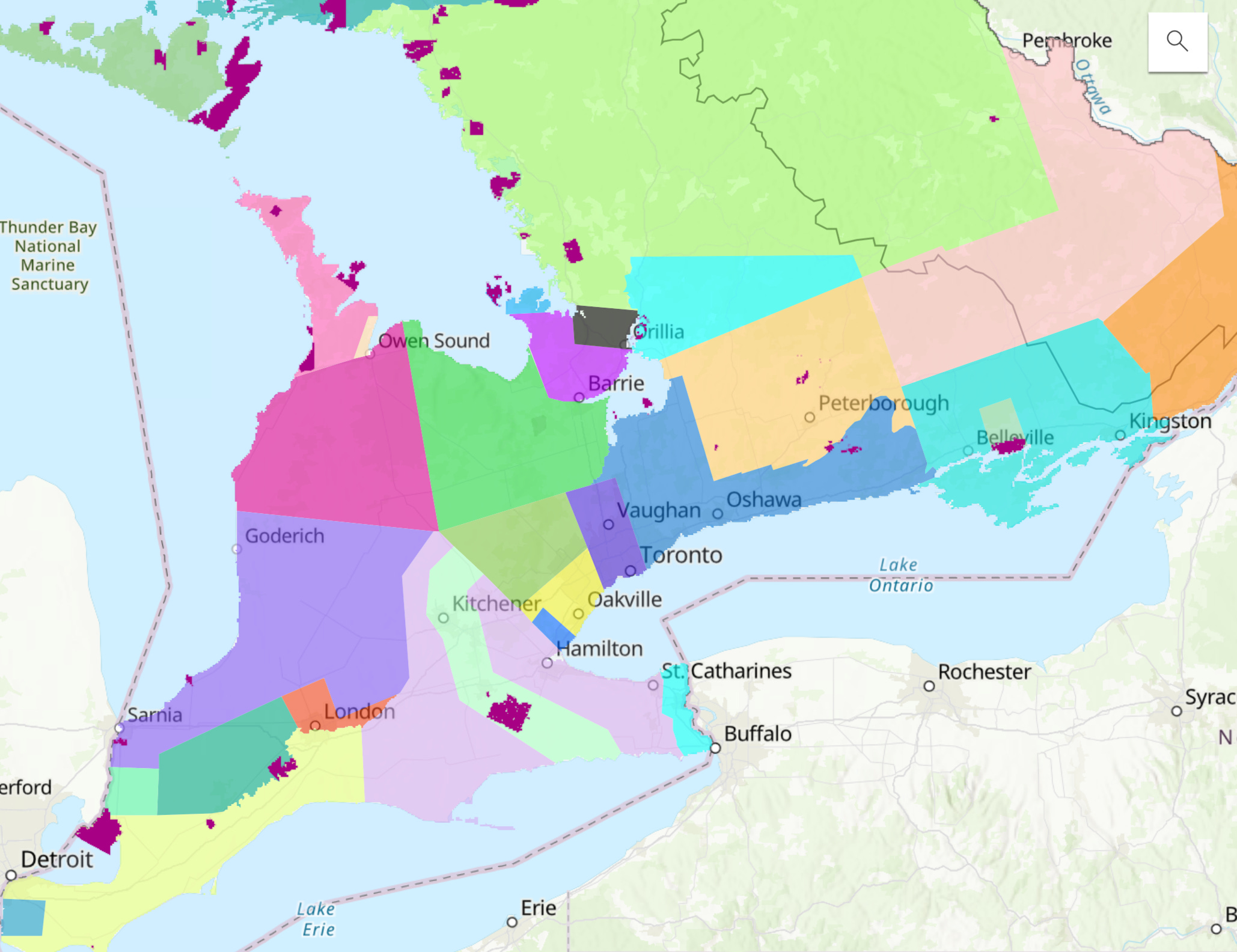
This map depicts the treaty land and reserves (coloured burgundy) in London and the surrounding areas.
Some of the closest reserves to London are:
MORAVIAN INDIAN RESERVE NO. 47, GLEBE FARM INDIAN RESERVE NO. 40B
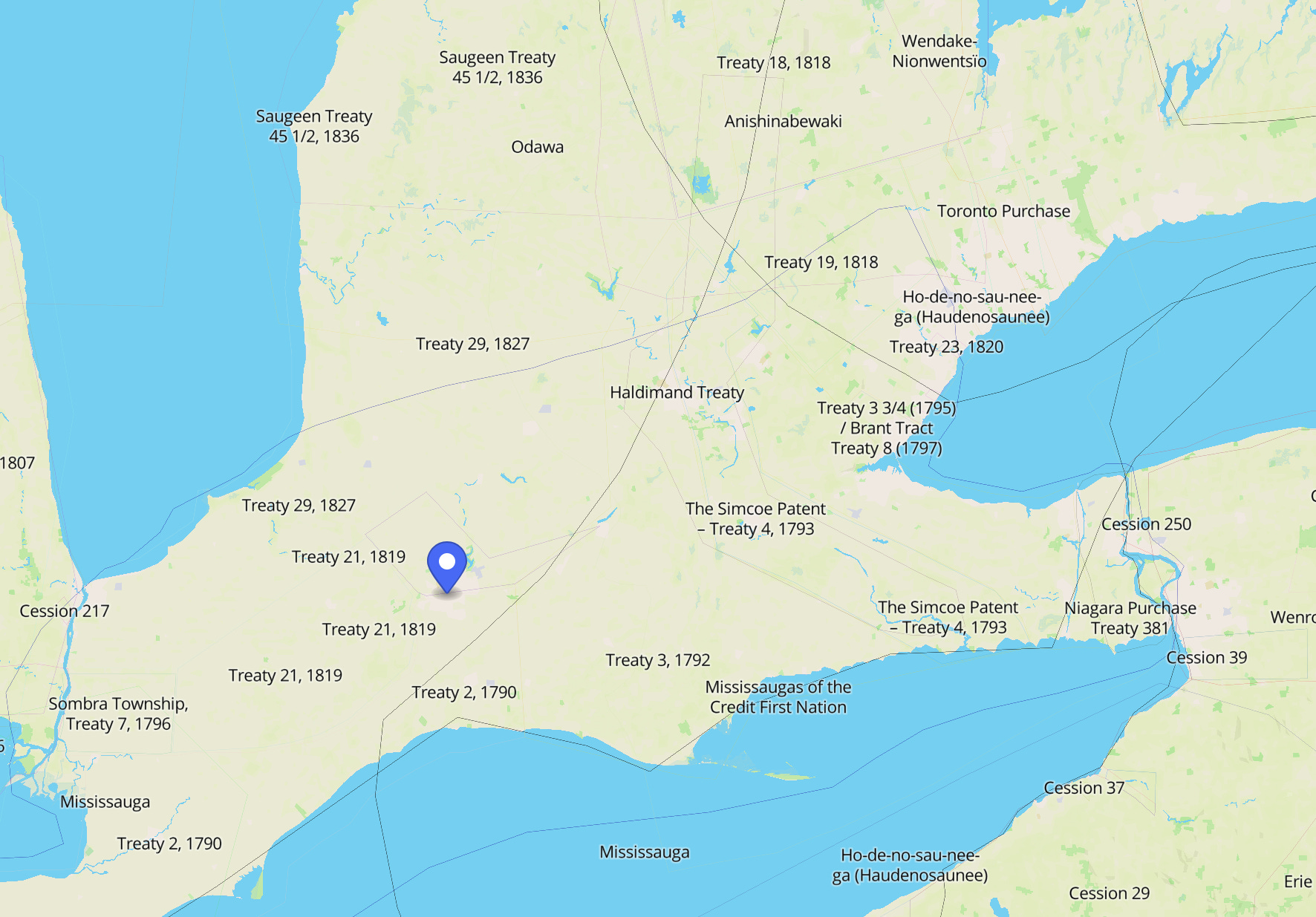
Treaty Land Near London Ontario:
N’Amerind (London) Friendship Centre (Located at 260 Colborne St.):
Mission Statement
The N’Amerind Friendship Centre is a non-profit organization committed to promoting the physical, intellectual, emotional, and spiritual well-being of native people with a particular focus on urban Indigenous peoples.
This commitment is realized through the implementation of culturally relevant programs aimed at social, recreational and educational needs. N’Amerind focuses on developing leadership, increasing awareness levels of native heritage, establishing resources for community development, and promoting the development of urban Indigenous self-governing institutions.
The following are resources from the Government of Canada regarding First Nations Maps of Ontario:
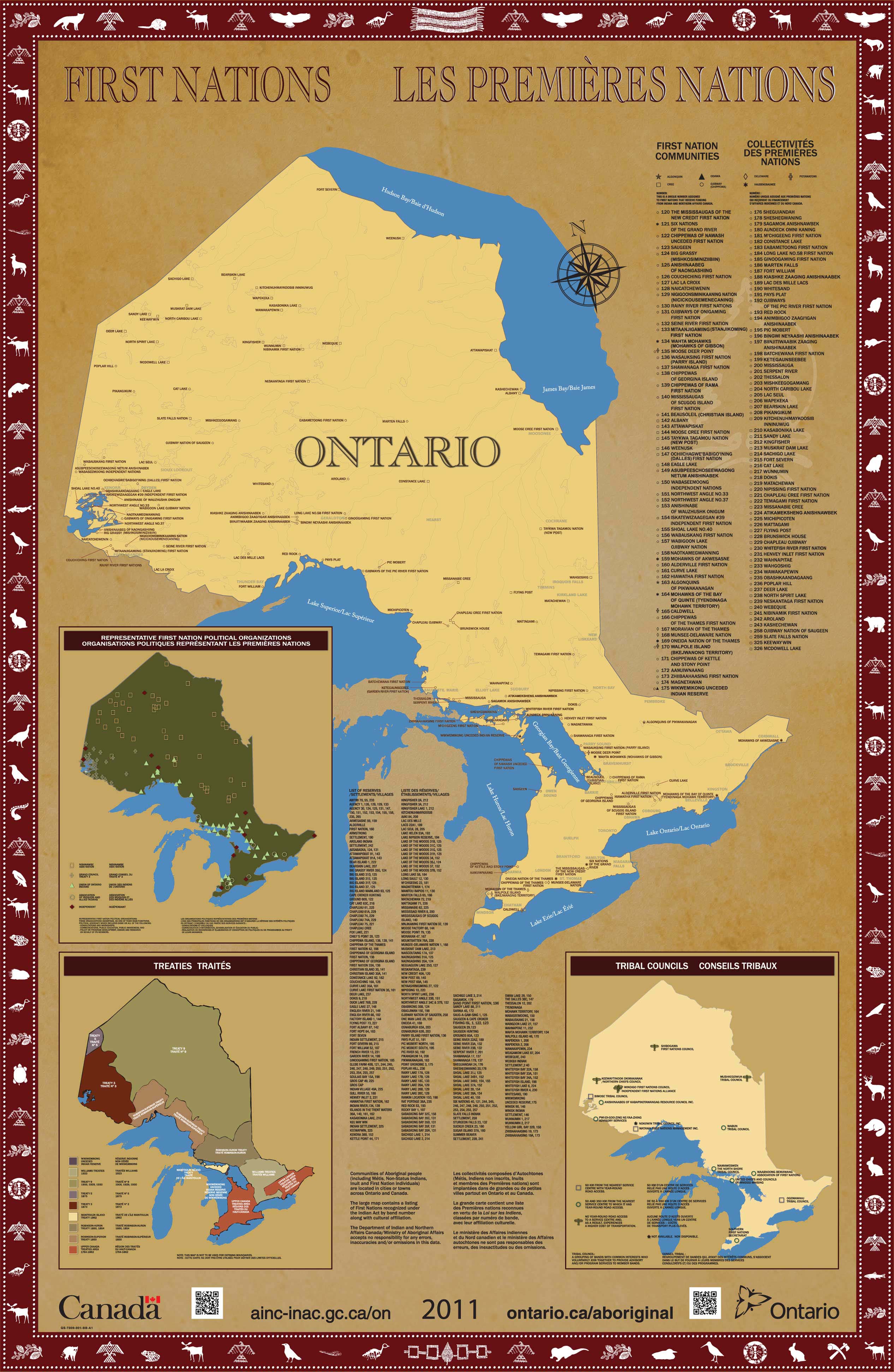
The Ontario First Nations map shows the locations of:
First Nation communities: listed by band number and cultural affiliation (e.g., Algonquin, Cree, Ojibway)
Tribal Councils (a grouping of bands with common interests who join together to provide advice and programs to their members)
reserves (land set aside for bands under the Indian Act and treaty agreements)
political organizations (e.g., Union of Ontario Indians, Grand Council Treaty 3)
land covered by specific treaties
The border shows symbols that have special meaning to First Nations communities in Ontario.
First Nations and Treaties Map of Ontario
The City of London Land Acknowledgement
We acknowledge that we are gathered today on the traditional lands of the Anishinaabek, Haudenosaunee, Lūnaapéewak and Attawandaron .
We acknowledge all the treaties that are specific to this area: the Two Row Wampum Belt Treaty of the Haudenosaunee Confederacy/Silver Covenant Chain; the Beaver Hunting Grounds of the Haudenosaunee NANFAN Treaty of 1701; the McKee Treaty of 1790, the London Township Treaty of 1796, the Huron Tract Treaty of 1827, with the Anishinaabeg, and the Dish with One Spoon Covenant Wampum of the Anishnaabek and Haudenosaunee.
This land continues to be home to diverse Indigenous people (First Nations, Métis, and Inuit) whom we recognize as contemporary stewards of the land and vital contributors to society. We hold all that is in the natural world in our highest esteem and give honour to the wonderment of all things within Creation. We bring our minds together as one to share good words, thoughts, and feelings and sincerely send them out to each other and to all parts of creation. We are grateful for the natural gifts in our world, and we encourage everyone to be faithful to the natural laws of Creation.
The three Indigenous Nations that are neighbours to London are the Chippewas of the Thames First Nation; Oneida Nation of the Thames; and the Munsee-Delaware Nation who all continue to live as sovereign Nations with individual and unique languages, cultures, and customs.
This Land Acknowledgement is a first step towards reconciliation. Awareness means nothing without action. It is important that everyone takes the necessary steps towards decolonizing practices. We encourage everyone to be informed about the traditional lands, Treaties, history, and cultures of the Indigenous people local to their region (From The Official Website for The City of London. https://london.ca/city-london-land-acknowledgement).